

Is Your Coaching Institute Visible on AI?
- AI Search Visibility
- More Student Enquiries
- ChatGPT & Gemini Ready
- AEO Content Strategy
- Google AI Overview Fix
- Free Visibility Check
Request a Quote
Why Your Coaching Institute’s Website Doesn’t Show Up When a Student Asks Google’s AI

A student walks into a demo class and mentions something offhand: “Sir, I asked ChatGPT which is the best UPSC coaching in Delhi. It gave me three names. Yours wasn’t one of them.”
You go home that evening and open Google. You search your own institute’s name. You’re on page one. Maybe even in the top three.
So what just happened?
Here’s the short version: ranking on Google and showing up in an AI answer are two different games now. You can win one and still lose the other. And if your enquiries have felt a bit slower lately, even though your website traffic looks perfectly fine on paper, this gap in coaching institute AI search visibility is very likely part of the reason.
This blog explains why this happens, what AI tools are actually looking for, and gives you a five-minute check you can run on your own institute today. No developer needed. No agency. Nothing technical.
Table of Contents
Why Isn't My Coaching Institute Showing Up in AI Search?
Ranking on Google and appearing in ChatGPT, Gemini, or Google’s AI Overviews are not the same thing anymore. AI tools give one direct answer instead of a list of links. So if your website content isn’t written in a way these tools can easily pick up and trust, you get skipped — even while ranking well on Google. This is the core reason behind most cases of coaching institute AI search visibility going missing despite a healthy Google ranking.
In short:
1) Google still shows a ranked list. AI tools generate a single answer — and coaching institute AI search visibility depends on which format your content follows.
2) AI tools favour clear, FAQ-style content and consistent business information over keyword-stuffed pages.
3) This is a content and structure problem, not a “rebuild your whole website” problem.
4) It’s fixable, and you can check where you stand right now, today.
Data-driven Digital Marketing Results for UPSC/IAS Coaching Institutes
Key Takeaways
1️⃣ AI tools like ChatGPT, Gemini, and Perplexity now shape how students discover coaching institutes — not just Google.
2️⃣ Ranking on page one of Google doesn’t guarantee your institute shows up when a student asks an AI tool directly.
3️⃣ AI tools prefer institutes with FAQ-style content, consistent details across the web, and real depth on their subject.
4️⃣ A five-minute self-check can tell you, right now, whether your institute shows up in AI answers.
5️⃣ Fixing this is about content and structure. It rarely means starting your website over.
The Moment You Realise Something's Wrong
Most coaching owners find out about this almost by accident. A student mentions it during a demo class. A staff member brings it up after scrolling through ChatGPT out of curiosity. Sometimes it’s a parent who says, “We asked an AI app, and it suggested some other institute first.”
Your first reaction is usually confusion, not panic. Your Google ranking looks fine. Your SEO reports look fine.
So why would an AI tool skip you?
Here’s the honest answer. Google ranking has run on one rule for almost two decades — match the keyword, build the links, win the click. AI search runs on a different rule entirely. That’s exactly what the rest of this blog walks through.
If you want a broader sense of how this fits into your overall growth strategy, it helps to see how an education marketing agency for coaching institutes approaches visibility across SEO, ads, and AI search together, rather than treating each one as a separate problem.
How Students Are Actually Searching for Coaching Institutes Now
This isn’t a small or temporary shift. A growing number of students now treat AI tools as their first stop, not their last.
Around 36% of students already use AI search engines like ChatGPT, Gemini, and Perplexity to discover and compare institutes before they ever fill out an enquiry form. Google AI Overviews — the AI-written summary that now appears above the regular search results — show up in a large share of all searches today, often before a single organic listing.
For UPSC and State PCS coaching, this matters more than most other industries.
Think about how a student actually picks an institute. They rarely choose the first result they see. They compare two or three institutes, read about faculty, check past results, ask a senior, and increasingly — ask an AI tool to shortlist for them. If your institute isn’t part of that shortlist conversation, you’ve lost the enquiry before the student even opens your website.
It’s worth knowing this shift isn’t limited to typed searches either — many students now ask the same questions out loud through voice search on their phones, and the same answer-first content that helps with ChatGPT or Gemini also helps your institute show up in those spoken queries.
You can see the scale of this shift in more detail in the education industry data on AI search adoption, which tracks how Indian students are changing the way they research institutes before enquiring.
Ranking on Google and Showing Up in AI Search Are Two Different Things
Here’s something most coaching owners have never been told clearly: Google Search and AI search run on different logic altogether.
Google still shows you a ranked list of websites based on relevance, authority, and a hundred other signals. You click whichever one looks best. AI tools work differently — they read across many sources and generate one answer, in their own words, usually naming just two or three institutes.
That answer isn’t built on page rank alone. It comes from training data, structured content, and trust signals — how clearly your website answers real questions, and how consistently your institute’s name and details appear across the web.
Think of it like asking a senior who’s already cleared the exam for an institute recommendation. They won’t suggest someone they’ve never actually heard credible things about, even if that institute has a beautiful website. They’ll only name institutes they’ve heard mentioned consistently, by people they trust. AI tools work on a similar instinct, just at a much bigger scale.
Why a Well-Ranking Website Can Still Be Invisible to AI
A website can rank on page one purely on the strength of backlinks and age, while still reading like a brochure — heavy on “we offer,” light on actually answering a student’s real doubt. AI tools tend to skip exactly this kind of content, even when Google rewards it.
To understand what actually moves the needle here, it’s worth reading about how coaching institutes attract more students online, which goes deeper into the content and trust signals that matter beyond basic rankings.
SEO vs AEO vs GEO — What Each One Actually Means for Your Institute
These three terms confuse almost every coaching owner we speak with. So let’s keep this simple.
SEO (Search Engine Optimisation) ranks your website higher on Google’s traditional results page. It’s the foundation, and it’s still necessary.
AEO (Answer Engine Optimisation) structures your content so AI tools and featured snippets can pick it as a direct answer to a question, not just rank it as a link.
GEO (Generative Engine Optimisation) builds enough recognition and consistent mention across the web that AI tools trust your institute enough to include it in a generated answer, even without you ranking first anywhere.
Here’s the difference in one glance:
| SEO | AEO | GEO | |
|---|---|---|---|
| Goal | Rank your page on Google | Get picked as a direct answer | Get mentioned by AI tools as trustworthy |
| Focus | Keywords, backlinks, technical fixes | Clear, question-based answers | Consistent presence and mentions across the web |
| Best for | Long-term organic traffic | Featured snippets, AI Overviews | ChatGPT, Gemini, Perplexity recommendations |
None of these replace the other. They work together. If you’ve already invested in SEO, that work isn’t wasted. It’s still the base everything else builds on.
If you want to see where your institute currently stands and what would actually move it forward, you can improve your coaching institute’s Google visibility as the starting point — the same groundwork that supports AEO and GEO later.
Not Sure Where Your Institute Stands Between SEO, AEO, and GEO?
If reading through these three terms left you wondering which one your institute actually needs first, you're not alone. Most institutes need a mix, just in a different order depending on where their website already stands today.
Why AI Tools Skip Most Coaching Institute Websites
The most common reason behind poor coaching institute AI search visibility is simple: Once you understand the difference between SEO and AEO, the reasons become fairly obvious. Here’s what we see most often when we look at coaching institute websites that AI tools keep skipping:
• The website explains what the institute offers, instead of answering what a student is actually asking. “We provide optional subject coaching” tells an AI tool nothing useful. “Is PSIR a good optional for a working professional preparing for CSE 2026?” is the kind of real question students type — and most websites never answer it directly.
• There’s no FAQ-style content anywhere on the site for AI tools to pick up.
• The institute’s name, address, and phone number don’t match exactly across the website, Google Business Profile, and directory listings — small differences like an outdated office address or a slightly different spelling of the institute name.
• Blog content, if it exists at all, is scattered — a post here, a post there, with no real depth around specific exams or optional subjects.
Why Consistent Business Information Across the Web Matters for AI Trust
AI tools cross-check your business details the way a careful student would cross-check a fact before believing it. If your institute’s name shows up slightly differently on your website, your Google Business Profile, and an old directory listing, that small inconsistency quietly lowers how confidently an AI tool will recommend you.
Why Scattered Blog Posts Don’t Build Topical Authority
One blog post titled “best UPSC coaching tips” does very little on its own. AI tools look for depth — institutes that write consistently and specifically about their subject, whether that’s a particular optional, a particular exam stage, or a particular type of student.
In our experience working with UPSC optional coaching institutes, the problem is rarely the institute’s actual teaching quality. It’s almost always that the website was built to look good, not to answer the exact questions a student types into Google or ChatGPT.
This is exactly where AI-friendly content for your coaching website makes the biggest difference — not by adding more pages, but by making the pages you already have actually answer something real.
How Google AI Overviews and Chatbots Actually Pick Which Institute to Mention
Nobody outside Google or OpenAI knows the exact mechanics here. Any agency that claims otherwise is overselling. But based on patterns we’ve observed across the institutes we’ve worked with, a few things consistently matter:
✅ Content that directly and clearly answers a specific question, in plain language, near the top of the page
✅ Structure — proper headings, short paragraphs, FAQ sections — that makes a page easy to scan and extract
✅ Consistent, verifiable business information across your website, Google Business Profile, and any directories you’re listed in
✅ Genuine topical depth on your subject, rather than one page trying to cover everything
This same structure also tends to help with voice search, since spoken queries like “which is the best UPSC coaching near me” rely on the same clear, direct-answer format that AI Overviews and chatbots prefer.
Myth: AI tools pick institutes randomly, or only big-budget brands get mentioned.
Fact: AI tools lean toward whichever content is clearest, most consistent, and most directly useful. Institute size matters far less than most owners assume.
This also means there’s no shortcut here through paid ads. You can’t buy your way into an AI Overview the way you can buy your way to the top of a Google Ads auction. It has to be earned through how your content and information are actually structured.
A 5-Minute Self-Check: Is Your Coaching Institute Visible to AI Right Now?
You don’t need an audit tool or a developer for this. Open a new tab and try it yourself.
Step 1: Ask ChatGPT or Gemini the exact question a student would ask — something like “best UPSC coaching institute in [your city]” or “best optional subject coaching for [your subject].” See if your institute comes up at all. Keep in mind AI tools don’t always give the exact same answer twice, so treat this as a useful signal rather than a one-time final verdict.
Step 2: Check your Google Business Profile. Is every field filled in — categories, description, hours, photos, services? An incomplete profile is a missed signal, not a small detail.
Step 3: Look through your website for any FAQ-style content. Does any page directly answer a real question a student has actually asked you, in your own words?
Step 4: Search your institute’s name online. Check whether your name, address, and phone number match exactly everywhere they appear — your website, your Google Business Profile, any directory listing.
Found even two gaps while running this? You now know exactly where to start.
If your institute is visible online but enquiries still aren’t matching what your website traffic suggests they should, this self-check is usually where the real answer is hiding. Not in your ad budget. Not in your faculty quality.
Found a Gap? Here's What to Do Next
If your self-check turned up even one or two gaps, that's usually exactly where lost enquiries are hiding. A short conversation can tell you whether the fix is quick or needs a deeper look at your content and structure.
What's Worked for Coaching Institutes That Got This Right
This isn’t theory. We’ve seen what happens when an institute builds the kind of structured, answer-first content that AI tools and Google both reward.
Synergy IAS, a UPSC coaching institute, saw a 2,468% growth in top-10 keyword rankings and crossed 12,000 organic clicks within just 90 days, once their content was rebuilt around real student questions instead of generic service pages. You can see how Synergy IAS grew its organic rankings for the fuller picture.
IMS4Maths, which runs Mathematics optional coaching, reached a 54% enquiry-to-admission rate, with 950 admissions coming through SEO and PPC combined. That’s proof this kind of work doesn’t just bring visitors — it brings students who actually walk through the door. The full numbers are in the IMS4Maths enquiry-to-admission results.
Results like these don’t happen overnight. In many cases, early improvement signs show up within 60–90 days, but stronger, lasting visibility depends on your competition, your existing website quality, and how consistently the work is done.
If you’d like an outside view on what’s realistic for your own institute, working with a digital marketing agency for AI search in India that already understands the UPSC coaching space can save you months of trial and error.
Frequently Asked Questions
Why is my coaching institute not showing up in ChatGPT or Gemini?
Most likely because your website content explains your services instead of directly answering the questions students actually type into AI tools. AI systems prefer clear, FAQ-style answers and consistent business information over keyword-focused pages, even if those pages rank well on Google. This directly affects your coaching institute AI search visibility, regardless of how well you rank on Google.
What is the difference between SEO and AEO for a coaching institute?
SEO ranks your website higher on Google’s traditional search results. AEO structures your content so AI tools and featured snippets can pick it as a direct answer to a specific question. Both matter, and they work together rather than replacing each other.
What is GEO and does it apply to coaching institutes?
GEO, or Generative Engine Optimisation, builds enough consistent recognition across the web that AI tools trust your institute enough to mention it in a generated answer. Yes, it applies to coaching institutes of any size, not just large national brands.
How does Google AI Overview decide which coaching institute to mention?
Based on observed patterns, Google AI Overviews favour content that directly answers a question early, is well structured with clear headings, and comes from a source with consistent, verifiable business information. There’s no confirmed, publicly known formula, so treat any guaranteed claim with caution.
How many students actually use AI tools to choose a coaching institute?
Around 36% of students currently use AI search tools like ChatGPT, Gemini, and Perplexity to discover and compare institutes before deciding, based on recent education research (Manaferra). This share is expected to keep growing as AI tools become part of everyday searching.
Can a small coaching institute appear in AI search results, or only big brands?
Smaller institutes can absolutely appear in AI search results. AI tools weigh content clarity, consistency, and topical depth far more heavily than brand size or marketing budget. A focused, well-structured smaller institute can outperform a larger one with a generic website.
How long does it take for a coaching institute to show up in AI Overviews?
There’s no fixed timeline, since it depends on your starting point, your competition, and how consistently the work is done. In many cases, early improvement signs show up within 60–90 days, with stronger visibility building over several months.
Does having a Google Business Profile help with AI search visibility?
Yes. A complete and accurate Google Business Profile is one of the simplest, highest-impact steps you can take. AI tools reference this information heavily when deciding which local businesses, including coaching institutes, to mention with confidence.
What content should a coaching institute publish to be picked up by AI tools?
Focus on content that directly answers real student questions — specific optional subjects, exam stages, or common doubts students raise during enquiries. FAQ sections, detailed course pages, and genuinely useful blog posts tend to perform far better than generic “about us” style pages.
Is normal SEO still worth doing if AI search is growing?
Yes. SEO is the foundation that AEO and GEO are built on top of. Traditional Google search still drives a large share of student enquiries, and the technical and content groundwork from SEO directly supports your visibility in AI search too.
Want to Know Where Your Coaching Institute Stands in AI Search?
Here’s the simple version of everything above. Ranking on Google and showing up when a student asks an AI tool are two separate things now. But the gap between them is very fixable. It’s almost always about how your content is structured and how consistent your institute’s information is across the web — not about rebuilding everything from scratch.
If you’re trying to figure out why your coaching institute isn’t showing up in AI search or Google results, this is exactly the kind of issue we help fix for education businesses every day.
Data-driven Digital Marketing Results for UPSC/IAS Coaching Institutes
Share this :

MgiWebzone
Passionate about SEO, content, and everything that helps businesses grow online.
Read All Post
Content Marketing for UPSC Coaching — Building Trust Before the Aspirant Even Calls
Tired of paying for ad traffic that never enquires?
- Boost Online Visibility Fast
- Get More Quality Leads
- Rank Higher on Google
- List Item
Tired of paying for ad traffic that never enquires?
- Boost Online Visibility Fast
- Get More Quality Leads
- Rank Higher on Google
- List Item
Tired of paying for ad traffic that never enquires?
- Boost Online Visibility Fast
- Get More Quality Leads
- Rank Higher on Google
- List Item
Popular Categories
How Can We Help?
Discover tailored solutions to grow your business and achieve lasting success.
Our Service
Our Latest Post




FOLLOW US ON
Facebook
Twitter
LinkedIn
Pinterest
WhatsApp
Skype
SEO Insights, Tips & Trends from Our Blog
Performance Marketing for Educational Institutes: A Complete Guide to Getting More Admissions in 2026
Scale Educational Admissions Using Performance Marketing Strategies Targeted Student Lead Generation Data-Driven Campaign Optimization High-Converting Ad Creatives Multi-Channel

Lead Generation for Coaching Institutes: Complete Data-Driven Guide (SEO, Ads, AI & Student Enrollment Strategy)
Fill Your Coaching Batches with Predictable Leads Data-driven student acquisition strategy SEO, Ads & AI combined High-intent enquiries,
Indian Education Marketing Statistics Report 2026: SEO, PPC, AI, Lead Generation & ROI Trends
Indian Education Marketing Stats 2026 Every Institute Owner Must Know Real Data on Student Search Behaviour SEO, PPC
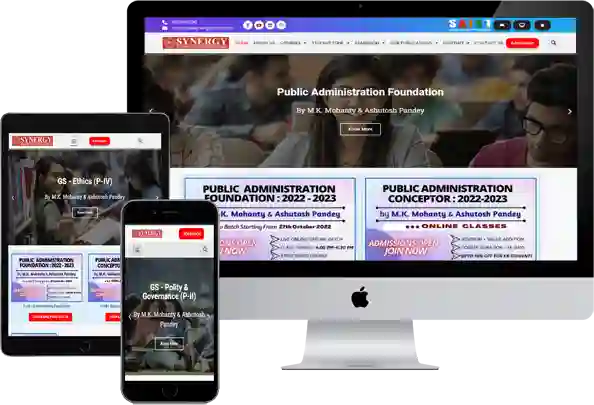
Website Design for Coaching Institutes and Education Institutes in India — The Complete Guide (2026 Edition)
Your Coaching Website is Not a Brochure — It’s Your Admission Engine Why Coaching Websites Fail to Convert
UPSC Optional Subject Coaching Market Report 2026: Complete Data on All 25 Subjects, Market Size, Toppers, and Trends
UPSC Optional Coaching Market Report Every Institute Owner Must Read Real Market Size Behind Each Subject 25 Subjects
How Big is the UPSC Coaching Market in India: Official Data, Student Segments, Revenue Estimates, and Growth Trends (2026)
The Complete UPSC Coaching Market Guide for Institute Owners Real Market Numbers Most Owners Miss 6 Student Segments
Trusted and Affordable Digital Marketing Company in Delhi, India
- Latest Marketing Strategy
- Affordable Service Packages
- Improve User Experience
- Quality & Organic Traffic
- Transparent Progress Report
- Certified Professionals Expertise
Request a Quote
5/5 - (20 votes)


